Showing posts with label hawaii artist. Show all posts

Thursday, September 17, 2015

"On the Spectrum (Jerusalem Syndrome)"

Aloha Friends,

Art is in the works!

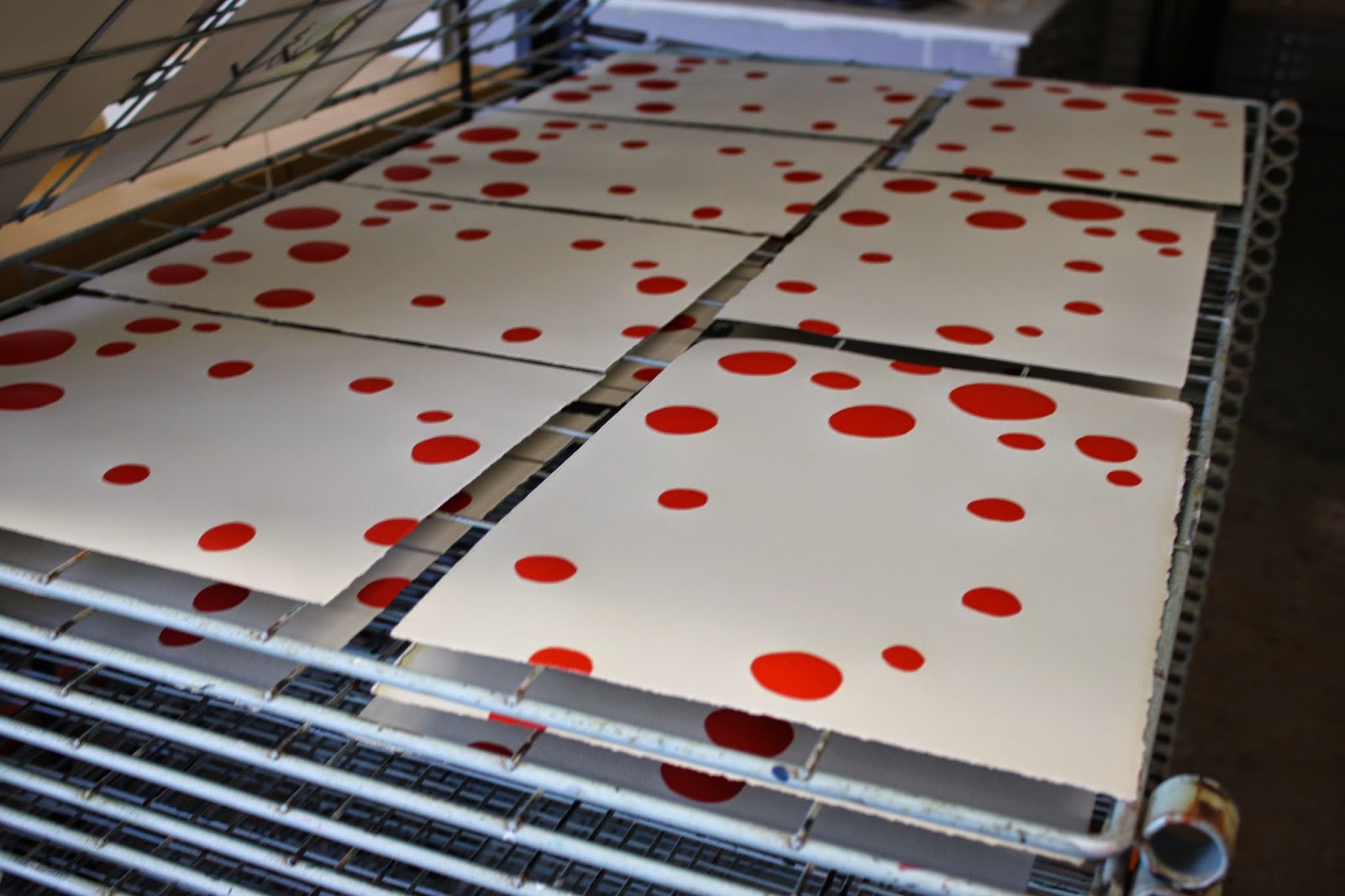
I have not had a chance to work on my screen printing series, Places Close to Home, in a little while since I've started working on setting up a home studio. I am very excited to start printing at home, it's been something I've been dreaming about but hadn't had the motivation to do until now. I am forever grateful that the University of Hawaii at Manoa has let me (as an alumni) use their studio space for so long. Hopefully I'll still get back in there for a few larger projects in the future but for now I am busy setting up my new space and so far so good.

And even though I am not fully set up, I am still working away on this series. I love the chaotic look and feel to this latest print. I feel it really captures the mood of this disorder in the vibrating line quality and the splash of yellow coming to the surface.

Check back soon (or on instagram) for some pictures of my set up! Any studio tips or advice for a screenprinting set up is very welcome, mahalo for looking!


***

On the Spectrum is a 26 part print series, one for each letter of the alphabet, that explores interactions of mental illnesses, developmental disorders and perceived normalcy as abstract landscapes. Please read my artist statement for more details.

***

Artist Statement: There is a strange disconnect between mental illness and normalcy – as if there is a stark dividing line between the two: Black and white, us and them, completely separate. I believe this arbitrary classification, ill, healthy, recovering... is very similar to how we catalog our colors: blue, red, green... The visible color spectrum reflects the human experience. An experience where colors cannot be contained as single, definable points. The spectrum is one band of ever shifting, transitioning hues, as are we – our lives and our experiences are continuous and overlapping, yet discreet.

We all exist in a world with other people. We interact daily with a wide range of personalities. It is not possible to limit your experience to “normal.” We are but one piece in the cosmos. No one exists in a vacuum. So instead of pushing past others whose mental or physical health might not reflect exactly our own, we must embrace.

We are made of many parts: our personalities, our bodies, and our world.


***

On The Spectrum (Jerusalem Syndrome)
2015
Screen Print on Paper
15" x 11" 
$100 (unframed)


Details:


***

Characteristics:

Jerusalem syndrome is a group of mental phenomena involving the presence of either religiously themed obsessive ideas,delusions or other psychosis-like experiences that are triggered by a visit to the city of Jerusalem. It is not endemic to one single religion or denomination but has affected JewsChristians and Muslims of many different backgrounds.
The best known, although not the most prevalent, manifestation of Jerusalem syndrome is the phenomenon whereby a person who seems previously balanced and devoid of any signs of psychopathology becomes psychotic after arriving in Jerusalem. The psychosis is characterized by an intense religious theme and typically resolves to full recovery after a few weeks or after being removed from the area. The religious focus of Jerusalem syndrome distinguishes it from other phenomena, such as Stendhal syndrome in Florence or Paris syndrome for Japanese tourists.

Kalian, M.; Catinari, S.; Heresco-Levi, U.; Witztum, E. "Spiritual Starvation in a holy space – a form of Jerusalem Syndrome", Mental Health, Religion & Culture 11(2): 161-172, 2008.


Don't forget to follow me on instagram if you'd like!


Mahalo for looking!
Boz Schurr


All work is copyright 2015 Boz Schurr. Please do not use without my permission. Mahalo!

Thursday, June 25, 2015

Project Space Mural 2015 (Day Two)

Aloha Friends!

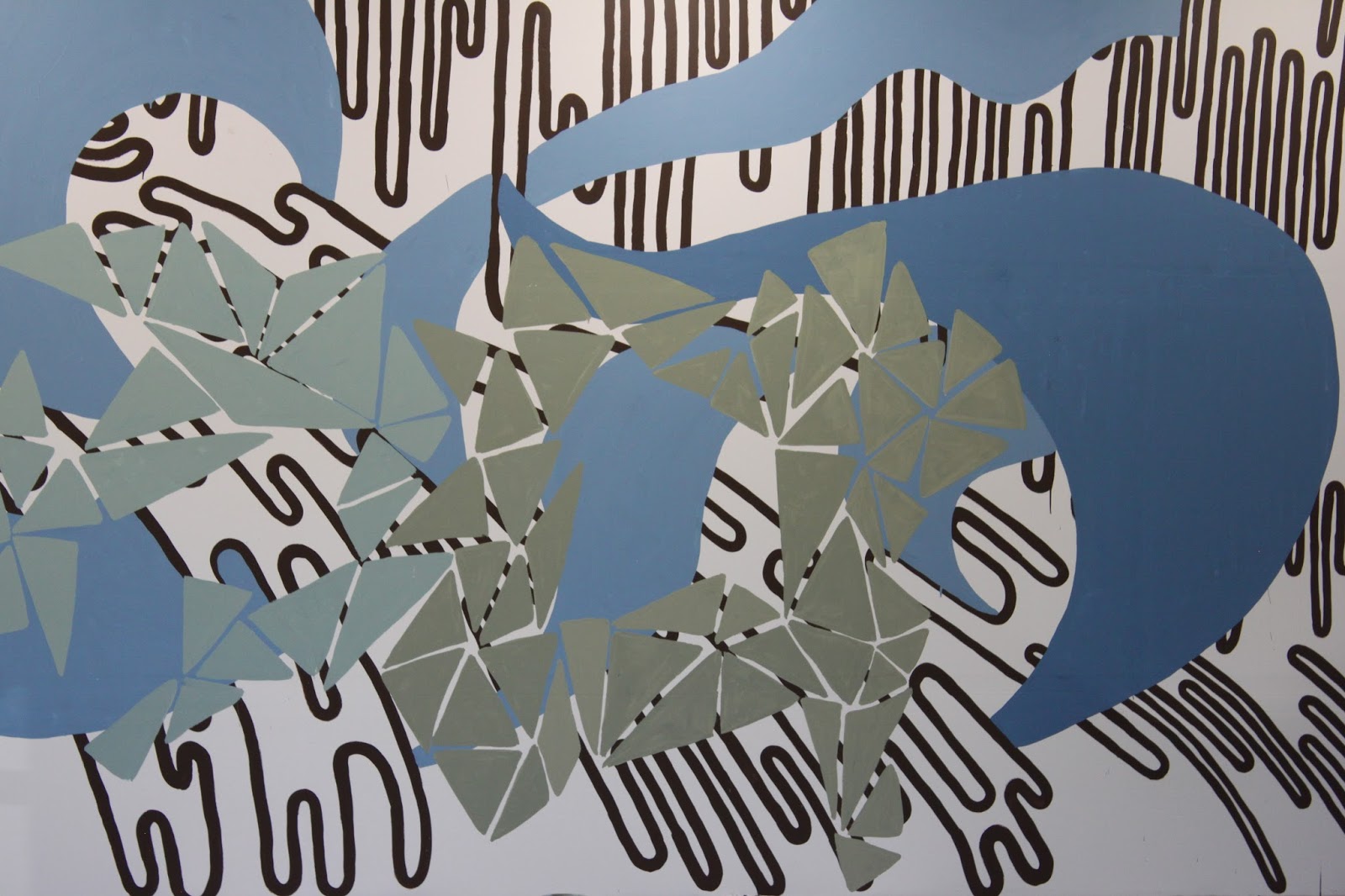
Day two of mural painting is pau! This is by far the biggest wall I've ever done! I have been working all day so I'm not even sure what the video will look like. All I know is the lighting in here makes some of the most beautiful shadows I have ever seen. I am really looking forward to editing the final project. Onward to day three!


***


Holoholo, Time-Lapse Mural by Boz Schurr
June 22-26 | Project Space | 156 Front St. NE Salem

Artist Boz Schurr will be working on a short-term, large-scale installation at the 156 Front Street location from June 22-26.

***


Day Two:

Am I channeling Keith Haring?


Details:


***


Don't forget to follow me on instagram if you'd like!


Mahalo for looking!
Boz Schurr


All work is copyright 2015 Boz Schurr. Please do not use without my permission. Mahalo!

Friday, June 12, 2015

"On the Spectrum (Grandiose Delusions)"

Aloha Friends,

I took a little unexpected hiatus these past few weeks in order to finish up a mural and get all my grading done! But thankfully summer is in full swing and I am back to my printmaking series On The Spectrum.  I have finished up the letter "G" and am hoping to get back into the studio a few more times before I start traveling for the summer. My goal is to finish this series by 2016! I've still got to find ideas for the letters Q, U, V, X, Y, Z so if you've got suggestions, or better yet a story, please message me or write a comment!

Thanks for looking!

***

On the Spectrum is a 26 part print series, one for each letter of the alphabet, that explores interactions of mental illnesses, developmental disorders and perceived normalcy as abstract landscapes. Please read my artist statement for more details.

***

Artist Statement: There is a strange disconnect between mental illness and normalcy – as if there is a stark dividing line between the two: Black and white, us and them, completely separate. I believe this arbitrary classification, ill, healthy, recovering... is very similar to how we catalog our colors: blue, red, green... The visible color spectrum reflects the human experience. An experience where colors cannot be contained as single, definable points. The spectrum is one band of ever shifting, transitioning hues, as are we – our lives and our experiences are continuous and overlapping, yet discreet.

We all exist in a world with other people. We interact daily with a wide range of personalities. It is not possible to limit your experience to “normal.” We are but one piece in the cosmos. No one exists in a vacuum. So instead of pushing past others whose mental or physical health might not reflect exactly our own, we must embrace.

We are made of many parts: our personalities, our bodies, and our world.


***

On The Spectrum (Grandiose Delusions)
2015
Screen Print on Paper
15" x 11" 
$100 (unframed)


Details:


***


***


Characteristics:

Grandiose delusions or delusions of grandeur are principally a subtype of delusional disorder that occurs in patients suffering from a wide range of mental illnesses, including two-thirds of patients in manic state of bipolar disorder, half of those with schizophrenia and a substantial portion of those with substance abuse disorders. GDs are characterized by fantastical beliefs that one is famous,omnipotent, wealthy, or otherwise very powerful. The delusions are generally fantastic and typically have a supernaturalscience-fictional, or religious theme.

Research suggests that the severity of the delusions of grandeur is directly related to a higher self-esteem in individuals and inversely related to any individual’s severity of depression and negative self-evaluations.

Expansive delusions may be maintained by auditory hallucinations, which advise the patient that they are significant, or confabulations, when, for example, the patient gives a thorough description of their coronation or marriage to the king. Grandiose and expansive delusions may also be part of fantastic hallucinosis in which all forms of hallucinations occur.

Diagnostic and Statistical Manual of Mental Disorders Fourth edition Text Revision (DSM-IV-TR) American Psychiatric Association (2000)

Knowles, R.; McCarthy-Jones S.; Rowse G. (2011). "Grandiose delusions: A review and theoretical integration of cognitive and affective perspectives". Clinical Psychology Review 31 (4): 684–696. doi:10.1016/j.cpr.2011.02.009PMID 21482326.

Smith, N. et al. (2006). "Emotion and psychosis: Links between depression, self-esteem, negative schematic beliefs and delusions and hallucinations". Schizophrenia Research 86(1): 181–188. doi:10.1016/j.schres.2006.06.018PMID 16857346.

***


Don't forget to follow me on instagram if you'd like!


Mahalo for looking!
Boz Schurr


All work is copyright 2015 Boz Schurr. Please do not use without my permission. Mahalo!


Monday, March 30, 2015

"On the Spectrum (Dissociative Identity Disorder)"

Aloha Friends!

After spending a magical week in Japan (blog post to follow) I am back teaching and preparing myself for another day in the studio this upcoming weekend. Until then I am going to continue to write and post about this print series in an effort to catch to where I actually am (my posts are a few weeks past due, whoops!) After such a dark, heavy print as was Cotard Delusion, this new print is much lighter but no less chaotic. The hand drawn lines are meant to be an artist's interpretation of a mental illness, personality disorder, etc as an abstract landscape. Each individual's experience with mental heath is unique and the goal of this work is bring attention to these unique experiences as right or wrong but to be viewed through a lens of acceptance.

As you may have noticed I am trying to stick to very specific colors for this series. The first print and letter of the alphabet, Asperger's Syndrome, started with the color red. I used this color because it is the first color in ROYGBIV also known as the visible light spectrum. If you read my artist's statement the use of the colors becomes clear. The second print, Bipolar Disorder, used a lighter, slightly more orange red and the third print, Cotard Delusion, becomes even more orange still. The color shift will continue so on and so forth till I reach the 26th print, letter Z, which will end in a lovely violet. Thank you for reading! I will update you on art, travel and teaching again soon! Thanks for reading!

***

On the Spectrum is a 26 part print series, one for each letter of the alphabet, that explores interactions of mental illnesses, developmental disorders and perceived normalcy as abstract landscapes. Please read my artist Statement for more details.

***

Artist Statement: There is a strange disconnect between mental illness and normalcy – as if there is a stark dividing line between the two: Black and white, us and them, completely separate. I believe this arbitrary classification, ill, healthy, recovering... is very similar to how we catalog our colors: blue, red, green... The visible color spectrum reflects the human experience. An experience where colors cannot be contained as single, definable points. The spectrum is one band of ever shifting, transitioning hues, as are we – our lives and our experiences are continuous and overlapping, yet discreet.

We all exist in a world with other people. We interact daily with a wide range of personalities. It is not possible to limit your experience to “normal.” We are but one piece in the cosmos. No one exists in a vacuum. So instead of pushing past others whose mental or physical health might not reflect exactly our own, we must embrace.

We are made of many parts: our personalities, our bodies, and our world.

***

On The Spectrum (Dissociative Identity Disorder)
2015
Screen Print on Paper
15" x 11" 
$100 (unframed)


Details:


Characteristics:

Dissociative identity disorder (DID), previously known as multiple personality disorder (MPD), is a mental disorder on the dissociative spectrum characterized by at least two distinct and relatively enduring identities or dissociated personality states that alternately control a person's behavior, and is accompanied by memory impairment for important information not explained by ordinary forgetfulness.

Dissociation, the term that underlies the dissociative disorders including DID, lacks a precise, empirical and generally agreed upon definition.[7][16][17] A large number of diverse experiences have been termed dissociative, ranging from normal failures in attention to the breakdowns in memory processes characterized by the dissociative disorders. Thus it is unknown if there is a common root underlying all dissociative experiences, or if the range of mild to severe symptoms are a result of different etiologies and biological structures

"The ICD-10 Classification of Mental and Behavioural Disorders". World Health Organization.

Lynn, SJ; Berg J; Lilienfeld SO; Merckelbach H; Giesbrecht T; Accardi M; Cleere C (2012). "14 - Dissociative disorders". In Hersen M; Beidel DC. Adult Psychopathology and Diagnosis. John Wiley & Sons. pp. 497–538. ISBN 1-118-13882-1.


***


Details of the print are also available on society6:


Don't forget to follow me on instagram if you'd like!


Mahalo for looking!
Boz Schurr


All work is copyright 2015 Boz Schurr. Please do not use without my permission. Mahalo!

Wednesday, March 11, 2015

"On The Spectrum (Bipolar Disorder)"

Aloha Friends,

This print is the second in my ongoing On The Spectrum series. I am moving along with the series and as each print happens I am getting more and more free with my mark making and my focus on the my concept. I really enjoy the play of line and dots on this one. Thanks for looking!

***

On the Spectrum is a 26 part print series, one for each letter of the alphabet, that explores interactions of mental illnesses, developmental disorders and perceived normalcy as abstract landscapes. Please read my artist Statement for more details.

***

Artist Statement: There is a strange disconnect between mental illness and normalcy – as if there is a stark dividing line between the two: Black and white, us and them, completely separate. I believe this arbitrary classification, ill, healthy, recovering... is very similar to how we catalog our colors: blue, red, green... The visible color spectrum reflects the human experience. An experience where colors cannot be contained as single, definable points. The spectrum is one band of ever shifting, transitioning hues, as are we – our lives and our experiences are continuous and overlapping, yet discreet.

We all exist in a world with other people. We interact daily with a wide range of personalities. It is not possible to limit your experience to “normal.” We are but one piece in the cosmos. No one exists in a vacuum. So instead of pushing past others whose mental or physical health might not reflect exactly our own, we must embrace.

We are made of many parts: our personalities, our bodies, and our world.

***


On the Spectrum (Bipolar Disorder) 
2015
Screen Print on Paper
15" x 11"
$100 (unframed)


Details:


Characteristics:

Mania is the defining feature of bipolar disorder,and can occur with different levels of severity. With milder levels of mania, known as hypomania, individuals appear energetic, excitable, and may be highly productive. As mania worsens, individuals begin to exhibit erratic and impulsive behavior, often making poor decisions due to unrealistic ideas about the future, and sleep very little. At the most severe level, manic individuals can experience very distorted beliefs about the world known as psychosis. A depressive episode commonly follows an episode of mania. The biological mechanisms responsible for switching from a manic or hypomanic episode to a depressive episode or vice versa remain poorly understood.


Barnett JH, Smoller JW (2009). "The genetics of bipolar disorder". Neuroscience 164 (1): 331–43. doi:10.1016/j.neuroscience.2009.03.080. PMC 3637882. PMID 19358880.

Beentjes TA, Goossens PJ, Poslawsky IE (October 2012). "Caregiver burden in bipolar hypomania and mania: a systematic review". Perspect Psychiatr Care 48 (4): 187–97. doi:10.1111/j.1744-6163.2012.00328.x. PMID 23005586.

Salvadore G, Quiroz JA, Machado-Vieira R, Henter ID, Manji HK, Zarate CA (November 2010). "The neurobiology of the switch process in bipolar disorder: a review". J Clin Psychiatry 71 (11): 1488–1501. doi:10.4088/JCP.09r05259gre. PMC 3000635. PMID 20492846.


Mahalo for looking!
Boz Schurr

All work is copyright 2015 Boz Schurr. Please do not use without my permission. Mahalo!

Wednesday, January 28, 2015

Society6 Art Available!

Aloha Friends,

I got some work on Society6! If you can't afford to buy an original, you might find a print or other product that fits your budget! Please feel free to follow me or please share if you want! Mahalo for your support! 

Please click any of these pictures below to check it out!


I will be posting more soon, but I wanted to get the word out and also ask you for suggestions! What artwork of mine would you like to see as a print? or a shirt? Please visit my flickr page for my full portfolio and add the link to the comments below!


Don't forget to follow me on instagram if you'd like! http://instagram.com/bozschurr


Mahalo for looking!
Boz Schurr

All work is copyright 2015 Boz Schurr. Please do not use without my permission. Mahalo!

Friday, May 2, 2014

"Sweet Potato"

Aloha Friends!

I have finally completed my piece for The Recycled Rain Project which opens in one week, May 10th in Portland, Oregon! After some trials and errors I have completed my piece and she is in the mail!

Sweet Potato
Acrylic on Stretched Paper, 16" x 20"
2014


Details:


To read more about this amazing annual show please see my other post: The Recycled Rain Project 2014!


Mahalo for looking!
Boz (Sunday Stingray)


All work is copyright 2014  Boz Schurr. Please do not use without my permission. Mahalo!